1. Technical proficiency and physical fitness
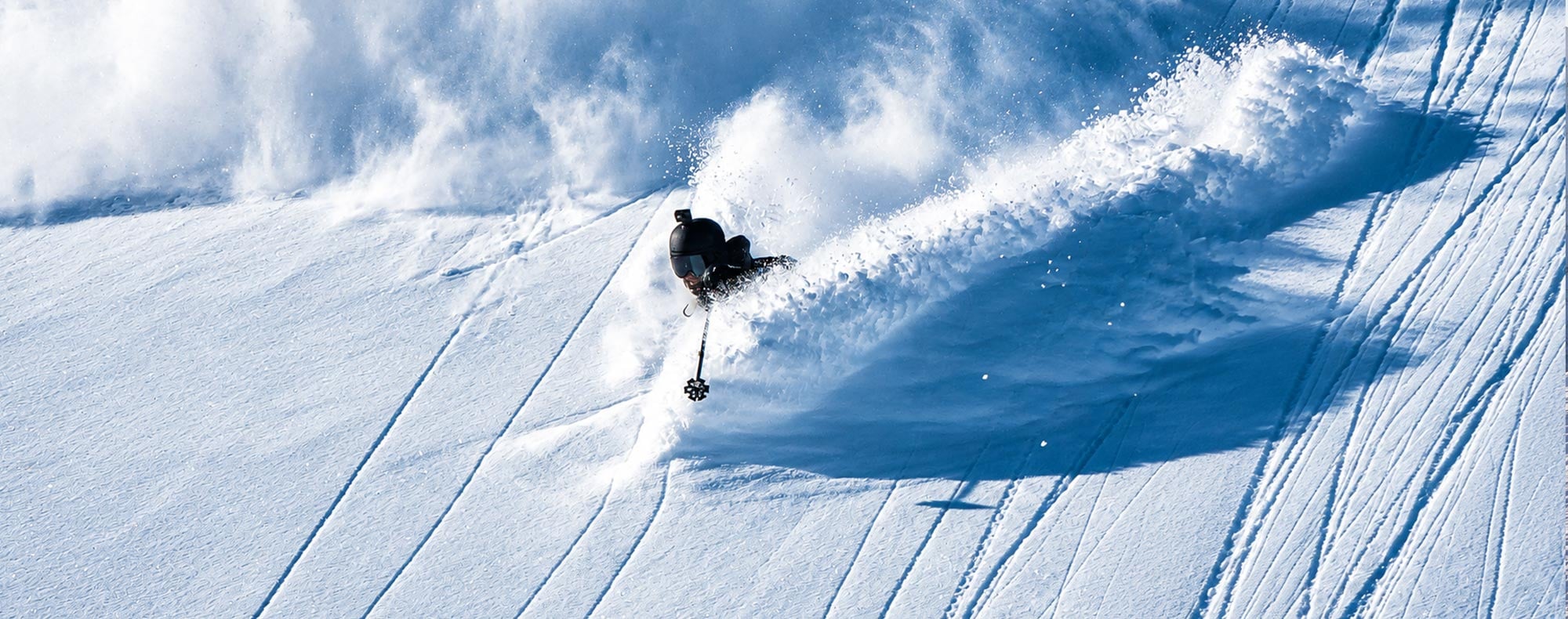
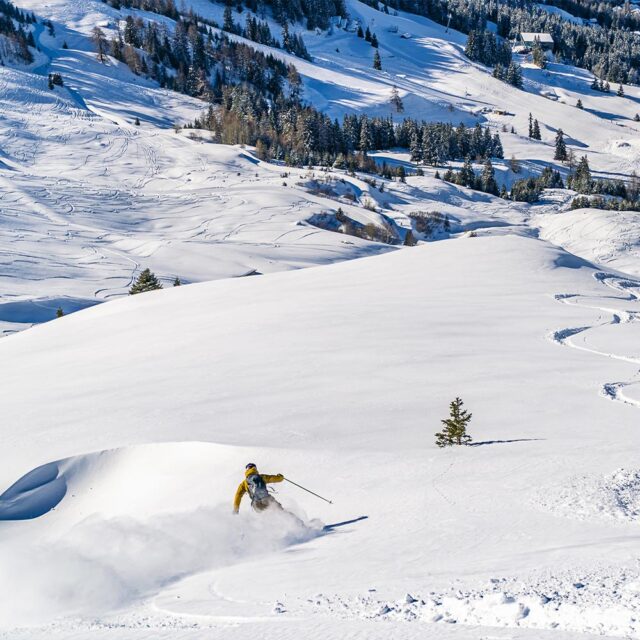
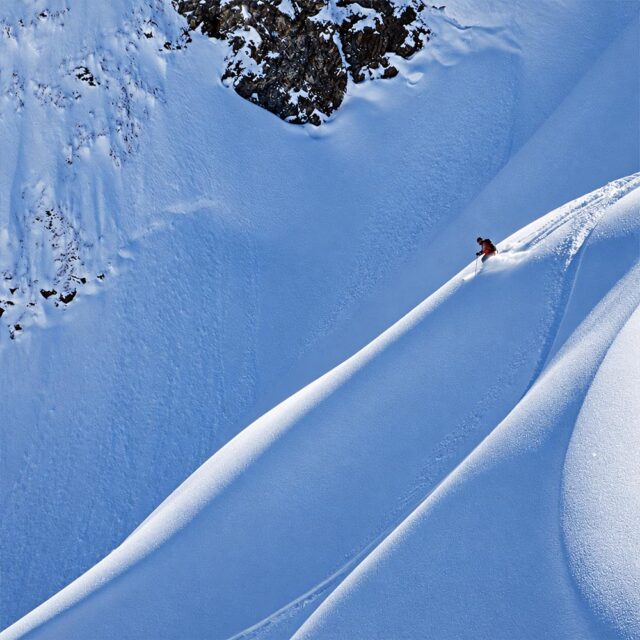
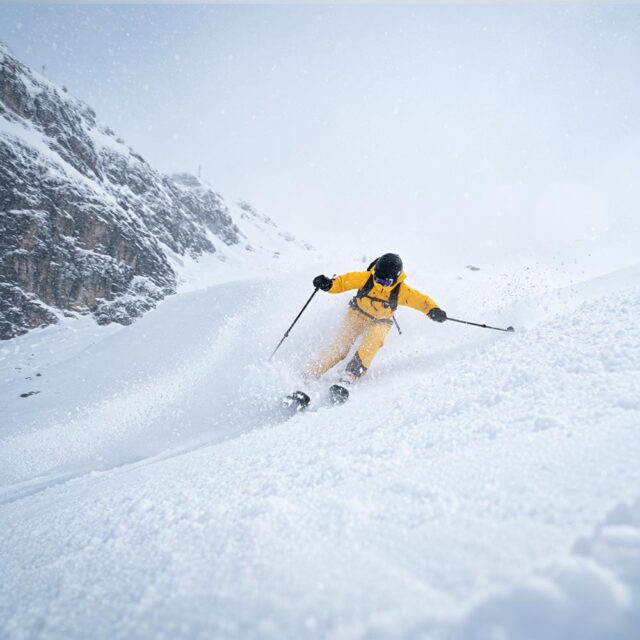
Freeriding requires excellent mastery of basic technique and good physical fitness. Unlike groomed slopes, off-piste routes feature variable terrain and uneven surfaces, which demand adaptability and control.
The risk of injury can be higher than when skiing on groomed runs: it is therefore important to assess your own abilities and choose routes suited to your level of experience.
2. Skis and snowboards suitable for fresh snow
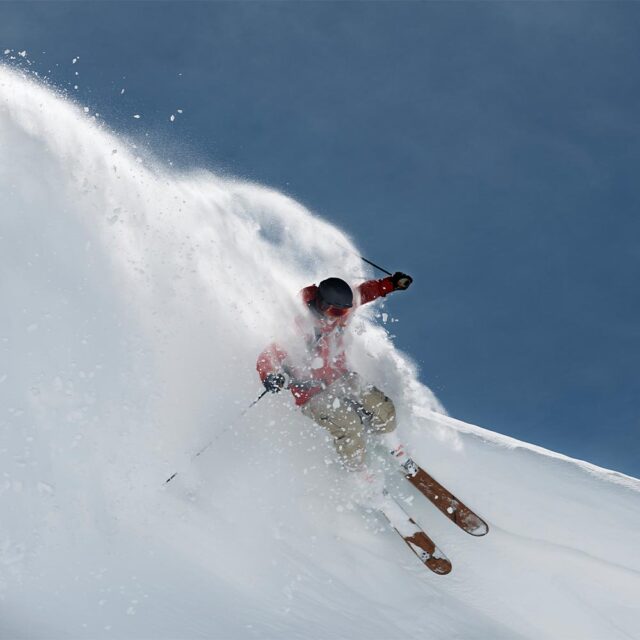
Freeride equipment is designed to cope with conditions that differ from those on groomed runs. Freeride skis and snowboards are generally wider, to aid flotation in fresh snow, and may have different lengths and profiles compared to piste models.
Choosing the equipment best suited to your ability and the snow conditions helps to improve your control and handling of the descent.
3. Safety kit, airbag and helmet
When venturing off-piste, it is essential to carry an avalanche self-rescue kit – comprising an avalanche transceiver (ARTVA), shovel and probe – and to know how to use each piece of equipment correctly.
- ARTVA: transmits and receives signals to facilitate the search for a person buried under the snow.
- Probe: allows you to pinpoint the exact location of the person beneath the snow.
- Shovel: used to dig and free the buried person.
- Airbag rucksack: can aid buoyancy in the event of an avalanche and help reduce certain risks.
- Helmet: provides essential protection in the event of a fall or impact.
The safety kit must be accompanied by appropriate training and knowledge of self-rescue procedures. Before every outing, it is also important to check snow conditions and the risk of avalanches.
4. Use a Mountain Guide
Never go off-piste alone. Even a seemingly minor injury can become a difficult situation to manage if there is no one able to provide assistance or call for help.
Hiring an experienced Mountain Guide is the recommended choice for approaching freeriding with greater awareness. Their knowledge of the terrain, the snow and environmental conditions enables the guide to assess routes and adapt the outing to the prevailing conditions.